
Jakarta, 9 October 2026
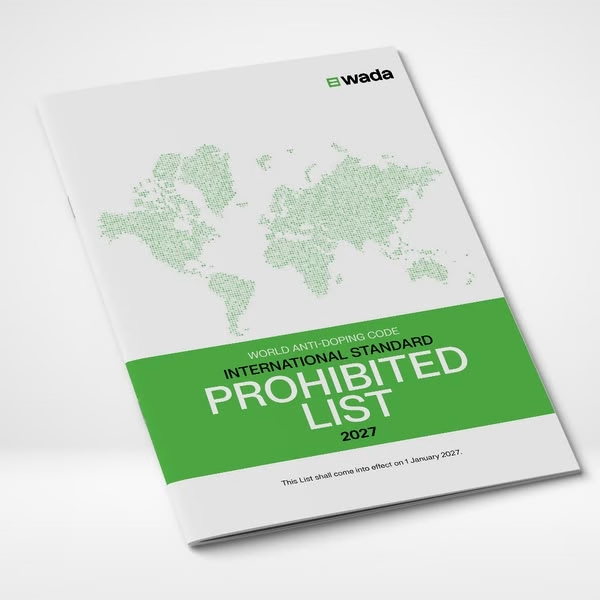
The World Anti-Doping Agency (WADA) has published the 2027 Prohibited List, which was approved by the WADA Executive Committee on September 10th, 2026, and will come into effect on January 1st, 2027. WADA publishes this list annually by updating the existing version. The 2027 Prohibited List contains relatively minor changes. However, WADA has detailed the key updates that athletes and stakeholders need to be aware of below. This updated list will take effect on January 1st, 2027.
As always, the 2027 Prohibited List includes new examples of prohibited substances as well as several clarifications. It is important to remember that WADA’s Prohibited List does not encompass every existing substance. There may be substances that are not specifically listed but still fall under the categories included in the Prohibited List. Prior to take any medication, it is essential to check the GlobalDRO.com website and search by brand name or ingredient to obtain the latest information regarding its anti-doping status.
Under the World Anti-Doping Code, any athlete is subject to the principle of strict liability, meaning he / she bears full responsibility for any substance found in his / her bodies. The 2027 Prohibited List, along with WADA’s explanatory notes regarding the changes, can be viewed here.
Category “S0” covers non-approved substances. Many peptides that have not been approved for human use by regulatory authorities meet the World Anti-Doping Code criteria for inclusion on the Prohibited List, falling under either category S0 (Non-approved Substances) or other categories (such as S2 or S4). These peptides include, but are not limited to: BPC-157, TB-500, AOD-9604, hGH 176-191, GH-releasing peptides (GHRP), CJC-1293, Thymosin-beta 4, Insulin-like growth factor 1 (IGF-1, mecasermin) and its analogues, Ibutamoren (MK-677), Ipamorelin, and Insulin.
There are several important points to note:
- In recent years (and extending through 2026), IADO has frequently encountered athletes using furosemide (often referred to locally as “Lasix”). IADO emphasizes that this substance is strictly prohibited based on the fact that WADA classifies furosemide as a diuretic and masking agent under category S5, banning its use both in-competition and out-of-competition. The reasons for the ban are: (a) Furosemide increases urine production and dilutes urine. Athletes may misuse it to eliminate or lower the concentration of other performance-enhancing drugs, making them harder to detect during doping tests; (b) Rapid Weight Loss: The drug forces the body to rapidly expel water and sodium. Athletes competing in weight-class sports (such as boxing, wrestling, or weightlifting) misuse it to shed weight quickly before weigh-ins; and (c) Furosemide misuse can lead to severe dehydration, dangerous electrolyte imbalances, low blood pressure, and potential heart failure.
- Regarding insulin. Insulin is prohibited by WADA at all times, both in-competition and out-of-competition. This is because: (a) It is listed under category S4 (Hormone and Metabolic Modulators) on the WADA Prohibited List, which encompasses insulin and insulin-mimetics (substances that mimic the action of insulin); and (b) Athletes sometimes misuse insulin for its anabolic properties (such as stimulating muscle growth and recovery), creating an unfair advantage and posing health risks. However, athletes diagnosed with diabetes (such as Type 1 Diabetes) who medically require insulin must obtain Therapeutic Use Exemption (TUE) approval before using the substance.
- Athletes are strongly advised to consult a doctor or sports medical team before taking any medication, as many commonly used prescription and over-the-counter drugs contain substances prohibited by WADA. Key steps for athletes to ensure compliance with WADA rules include: (a). Check the Prohibited List, as WADA updates it annually. In facts, substances permitted last year may be prohibited this year; (b). Verify Every Medication. Common medications for conditions such as asthma, high blood pressure, or the flu may contain prohibited stimulants or diuretics; (c). Apply for a TUE. If an athlete requires a prohibited substance to treat a legitimate medical condition, they must apply to IADO for a Therapeutic Use Exemption (TUE) before using it; (d). Be Cautious with Dietary Supplements. Supplements are not strictly regulated and are often subject to cross-contamination, meaning they may contain prohibited substances not listed on the label; and (e). Strict Liability Rule. Under anti-doping regulations, athletes bear full responsibility for the presence of any prohibited substance in their bodies, regardless of whether the substance was ingested intentionally or unintentionally.
There is currently a marked upward trend in the use of “peptides” for various purposes, including potential doping. However, athletes must be aware that this “peptide usage trend” can pose health risks and lead to serious anti-doping rule violations. Athletes should also be aware that not all prohibited peptides are specifically listed on GlobalDRO.com. While Global DRO lists prohibited peptides as soon as they are identified, prohibited peptides may be sold under different names or slang terms. Furthermore, there may be experimental peptides sold online that have not yet been detected or monitored by the anti-doping community.
Even if a peptide is not listed in the Global DRO or the WADA Prohibited List, extra caution is warranted, as the substance could still fall under a prohibited category and pose health risks. Furthermore, substances in category S0 are prohibited at all times. Category S0 encompasses any pharmacological substance that does not fall under any other WADA category and has not been approved for therapeutic use in humans by any governmental health authority worldwide.
It should be noted that the Prohibited List is an International Standard within the World Anti-Doping Program, outlining substances and methods prohibited in sport, both in-competition and out-of-competition, as well as specific substances banned in particular sports. The 2027 list introduces changes and clarifications regarding categories such as Substances of Abuse, Hormone and Metabolic Modulators, Cannabinoids, Glucocorticoids, and Beta-blockers. WADA has also released supporting documents to assist stakeholders in understanding these changes.
The Indonesia Anti-Doping Organization (IADO) urges athletes, coaches, medical personnel, and athlete support staff to familiarize themselves with the 2027 Prohibited List before it comes into effect. Athletes are also reminded to verify the status of any medications or substances they use and to consult medical professionals or anti-doping organizations should they require further information. The official document can be accessed via the WADA website: https://www.wada-ama.org/en/news/wada-publishes-2027-prohibited-list.
Jakarta, 9 October 2026.
Chairman of IADO,
Gatot S. Dewa Broto