Jakarta, 22 September 2026
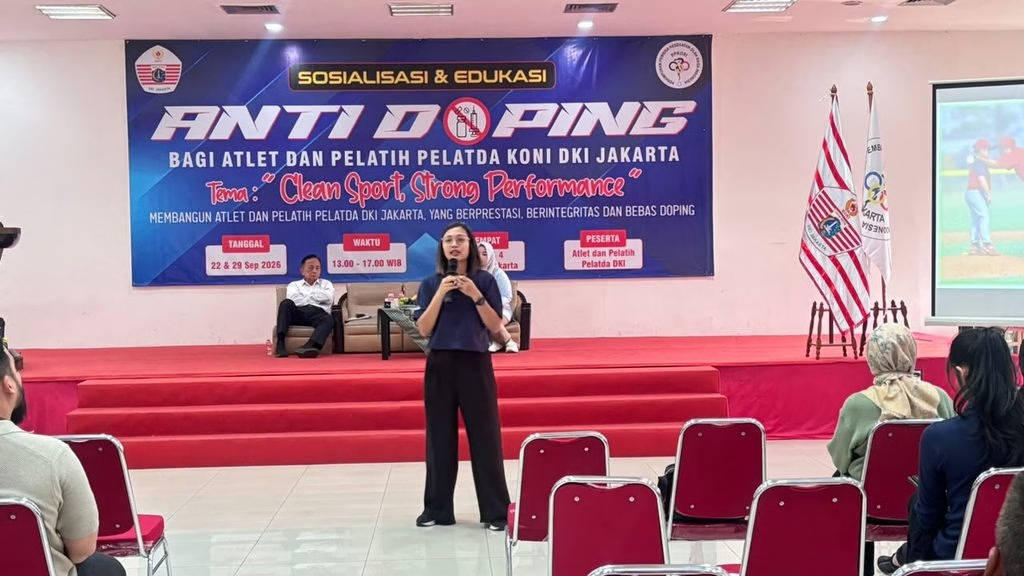
On September 22nd, 2026, the Indonesian Sports Health Development Association (PPKORI), acting as the event organizer, held an anti-doping education session in collaboration with the DKI Jakarta National Sports Committee (KONI). The event was themed “Clean Sport, Strong Performance: Building High-Achieving, Principled, and Doping-Free Athletes and Coaches for the DKI Jakarta PON XXII/2028 Regional Training Squad.” Held at the DKI Jakarta KONI Provincial Building, the event was attended by 130 participants representing 23 sports disciplines. The seminar began with a report from the Organizing Committee Chairman Mr. Maulana Malik Ibrahim, S.Gz., M.Gizi. Subsequently, the Chairman of KONI DKI Jakarta Prof. Hidayat Humaid, M.Pd., delivered opening remarks and officially inaugurated the event.
The seminar covered nine key topics: Clean Sport principles, the background of anti-doping organizations, Anti-Doping Rule Violations (ADRV) and the consequences of doping, athlete rights and responsibilities, the Prohibited List, Therapeutic Use Exemptions (TUE), the doping control process, “Speak Up” procedures, and an introduction to the ADEL platform. The sessions on the Prohibited List and TUEs were presented by Dr. Arie Sutopo, Sp.KO, while the remaining topics were covered by IADO Education Presenter (PRESI) Dr. Merryana Seputri, Sp.KO. The seminar was conducted interactively, allowing participants to engage in discussions and ask questions. One question raised by a participant was whether green coconut water could neutralize ingested medication, thereby preventing its detection during doping tests. Addressing this question, Dr. Arie Sutopo, Sp.KO, stated that while green coconut can be consumed, it cannot render ingested medication undetectable during doping tests. Another question that arises was whether it is possible to determine how long a drug remains in the body before it is no longer detected during testing. According to Dr. Merryana Seputri, Sp.KO, every drug has a different half-life; however, it is important to note that individual physiological differences exist, making it advisable to adhere to the principle of “strict liability.”
Of the 62 participants who completed the evaluation form, 44 were athletes. The evaluation results showed an excellent response, with all respondents (100%) expressing high satisfaction regarding the resources, materials, topic relevance, overall content, and time management. Participants noted that the activity helped them gain a deeper understanding of prohibited substances and methods in sports, anti-doping regulations, and the risks associated with the use of medications and supplements. Some participants also expressed a hope that such activities would be held more frequently, ensuring that anti-doping information remains up-to-date and reaches a wider audience of athletes and support personnel.
Through this activity, it is hoped that DKI Jakarta’s regional training squad (Pelatda) athletes and coaches will be better prepared for PON XXII/2028—not only in terms of performance but also in understanding and applying the principles of clean sport. Achievements should go hand-in-hand with sportsmanship, integrity, and a commitment to remaining doping-free. IADO will continue to collaborate with KONI and other relevant stakeholders to expand anti-doping education and foster an Indonesian sports environment characterized by cleanliness and integrity.